
The ABC's of Authentic Leadership
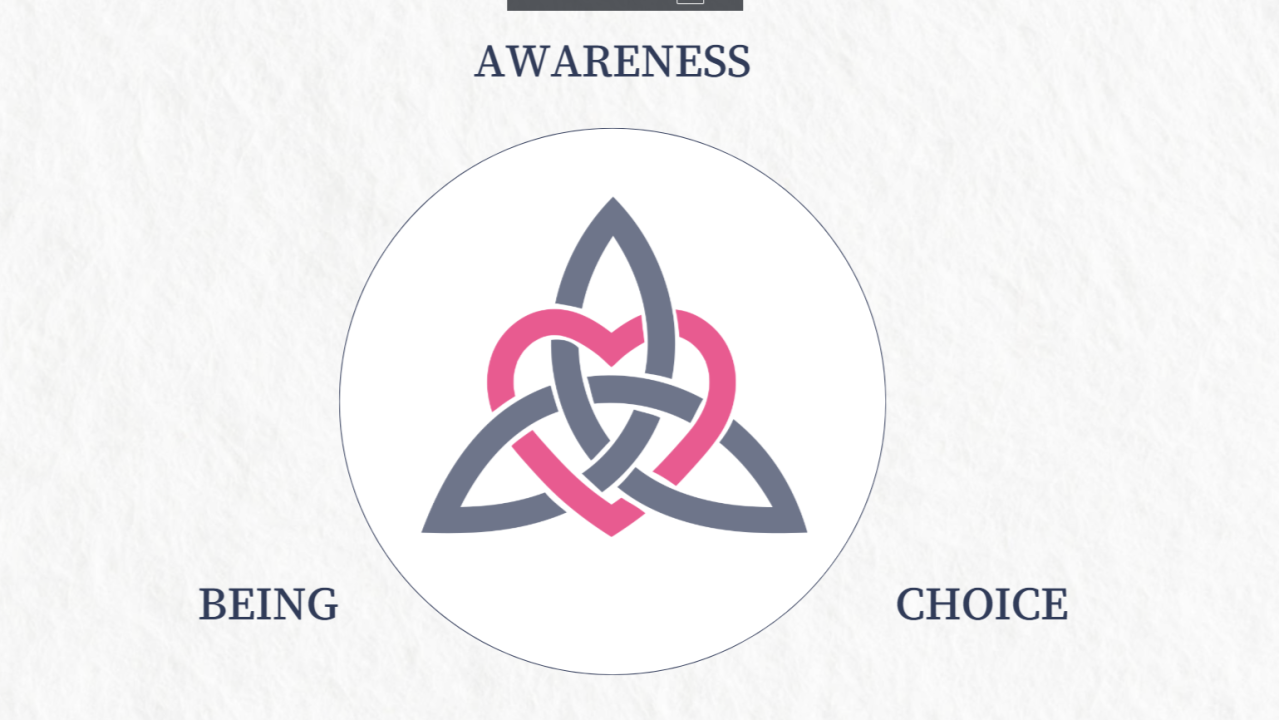
When I was working toward my coaching certification, I was tasked with creating my own coaching model. There was just one problem: I hadn’t coached much yet. My ideas about coaching felt like seeds barely sprouting in the soil of my mind. A few years later, that model has grown. It's rooted more deeply as I continue to explore what truly drives transformational change.
The model is simple: Awareness, Being, and Choice — the ABCs.
Let me walk you through it and connect it to the concept of authentic leadership.
Awareness
All growth and mastery start with conscious awareness. We can’t change what we don’t notice. We can’t gain control over what we don't even see.
- Awareness begins with our thoughts: Are they expansive and growth-oriented, or restrictive and negative?
- Then our feelings: Are we tired, energized, overwhelmed, content, anxious, joyful?
- And finally, our body: Is there tension in the chest? A clenched jaw? Relaxed shoulders? A steady heartbeat? Our bodies are expressions of our thoughts and feelings.
Thoughts and emotions are like clouds — passing snapshots, always shifting. We are not our thoughts. We are notour feelings. Our authentic self — our core essence — runs deeper than any momentary thought or emotion. Importantly, thoughts and feelings are not separate. They constantly influence each other. Negative thoughts lead to negative feelings, and negative feelings spiral into more negative thinking. The same goes for positive thoughts and feelings.
The best way to shift the cycle from negative to more positive isn't by thinking harder — it's by changing how we feel. If you’re upset about a mistake, telling yourself “Don’t be upset” often doesn’t work. But doing something that improves your mood — going for a walk, exercising, getting good sleep — does. Feel better, and better thoughts naturally follow.
Being
Who we are in the moment matters just as much as what we do. You’ve heard the saying: “Actions speak louder than words.” True. But how we act — with what energy, what intention — is equally powerful.
How do you show up? Are you harsh and critical with yourself and/or others? Or do you meet yourself with kindness and support? Are you present with others? Or lost in your thoughts? Being fully present creates space. Space to observe. Space to choose. Mindfulness, meditation, dancing, even just grounding yourself by taking a few deep breaths — these practices expand that space.
Viktor Frankl captured it best:
"Between stimulus and response there is a space. In that space is our power to choose our response. In our response lies our growth and our freedom."
Choice
With awareness and presence, we gain the power to choose. To choose how to be, what to say, how to act. True change requires choice — not just noticing our patterns, but intentionally choosing a different path and creating practices that support that different path .
At first, this feels uncomfortable. Like cutting a passage through thick jungle rather than cruising down a five-lane highway. Our brains crave certainty, even if that certainty keeps us stuck. Choosing differently can feel risky, unpredictable — and that's exactly where growth happens.
Frankl also reminds us:
"Everything can be taken from a person but one thing: the last of human freedoms — to choose one’s attitude in any given set of circumstances, to choose one’s own way."
Choice is where our power lies. Awareness - Being present - and Choice are interconnected and connected to our purpose, values and our core - hence the heart at the center of the model.
The ABC Model and Your Authentic Best Self
In one of my coaching groups and in my Authentic Pathways podcast, we are exploring the concept of authenticity. Being authentic doesn’t always mean being at our best. We can authentically feel anger, resentment, jealousy. If we (re)act from that space — lashing out, shutting down, pleasing — we possibly are still feeling "authentic." But are we being our authentic bestselves?
This is where the ABC model helps:
- Awareness: I notice I’m triggered — I feel disrespected, resentful. I notice and acknowledge these thoughts, feelings and how my body reacts.
- Being: I pause. I ground myself by noticing my breathing, the feeling of my feet on the floor, take in the sounds around me.
- Choice: I consider my options. Maybe I excuse myself from the meeting. Maybe I calmly name what I’m feeling. Maybe I simply stay silent and breathe.
My automatic reaction might have been storming out, attacking the other person, or pretending everything was fine. These options might feel authentic — but which choice honors my best self? Ignoring my feelings, hiding behind a mask, eventually exhausts me. Others sense it, too, creating distance and mistrust. True authenticity means aligning my actions with my values and honoring what I need.
Final Thought
Authenticity isn't about reacting on impulse. It’s about choosing, with awareness and presence, the way we want to show up. It’s about bringing our whole selves to the moment — not just whatever emotion happens to be strongest — even though we need the awareness to choose intentionally.
This brings more joy, deeper connections, less stress, and better performance. It makes leadership — and life — more sustainable and fulfilling.
I'd love to hear your thoughts on the model and your take on authenticity. Please do share!
Dive deeper...

The Hidden Pitfalls of High-Achievers: Breaking Free from the Hustle Trap
While it’s inspiring that people are working toward a fairer, more inclusive society, my approach focuses on personal empowerment within these realities. Given that life’s challenges are inevitable and many factors remain outside our control, how can we still strive for success without putting ourselves…
Continue reading...
What Does Balance Really Mean? Exploring Perspectives and Possibilities
When I think about balance, the image of walking a tightrope comes to mind. But this metaphor feels too rigid, too linear. Life, after all, is more like an intricate web of possibilities—filled with choices, surprises, and constant change. Yet, even on a tightrope, there…
Continue reading...
Life and Career Fulfillment Is Not a Luxury—It’s a Practice
I’ve always been ambitious—not for power, status, or money, but for making a difference and doing good. This drive stems from one of my core values: contribution. Growing up, I was deeply influenced by my parents’ work. My father was dedicated to public health projects…
Continue reading...